
Is a hornet's nest reused the following year?
Contents
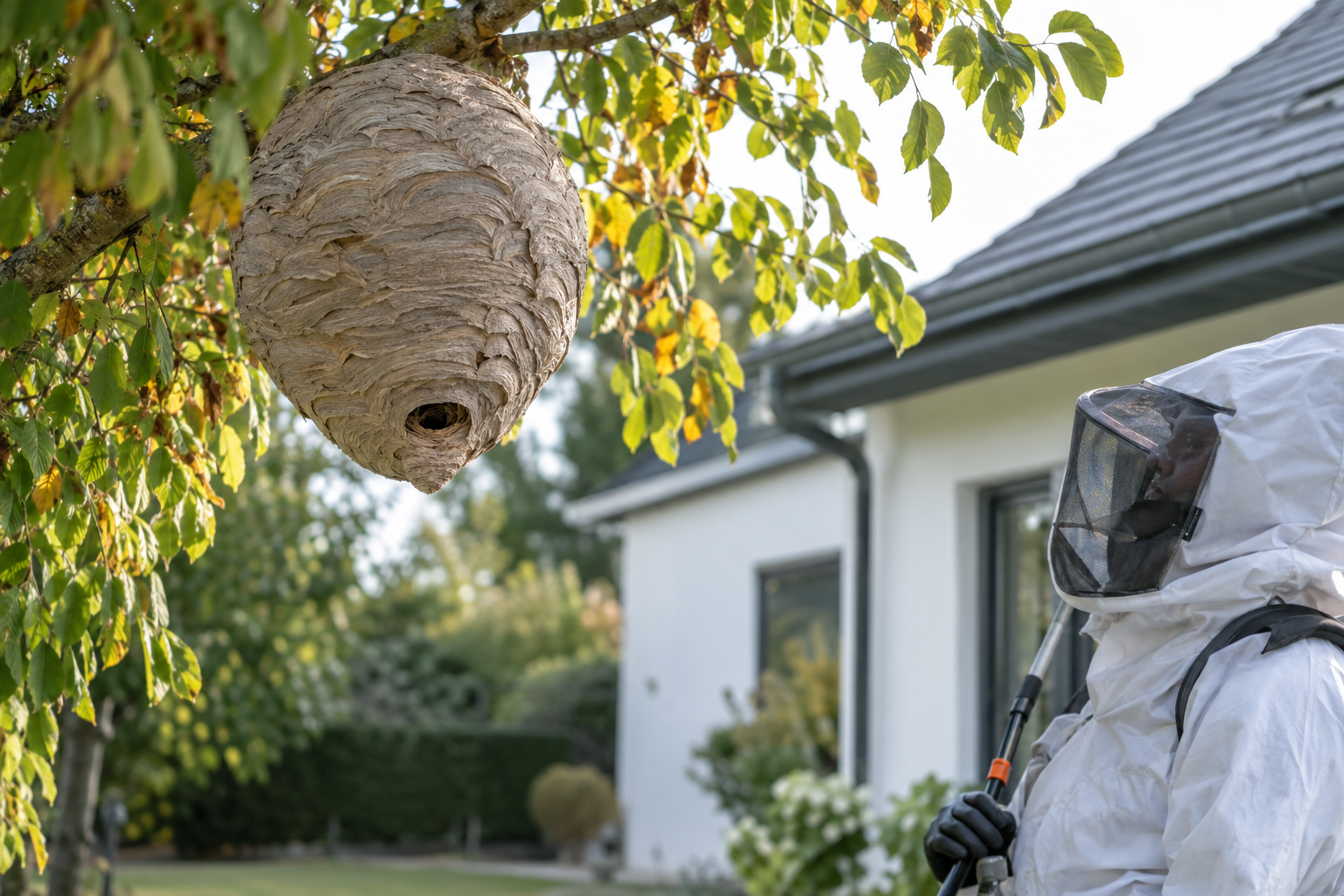
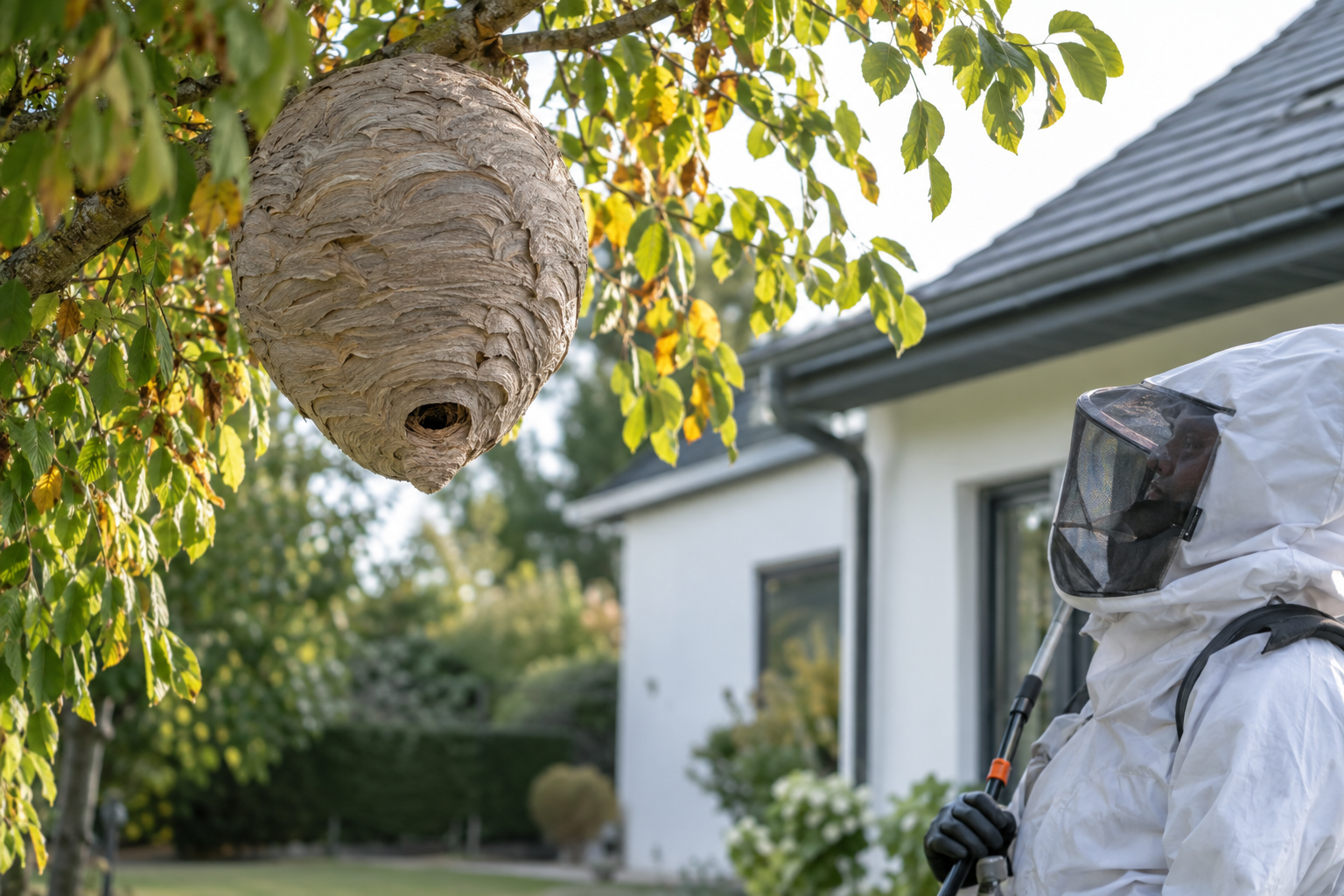
Did you find a big ball of paper in a tree after the leaves fell? The question quickly comes to mind: Will the hornets return to it in the spring? No, an old hornet's nest is not normally reused the following year. Both the Asian hornet and the European hornet build their own nests.
The detail that makes all the difference is the location. A cozy garden shed remains cozy, even after its former occupants have left. It’s therefore possible to find a new nest near the previous one without the old structure being reoccupied. To determine whether action is needed, it’s best to distinguish between three things: the abandoned nest, the conditions that attract a new queen, and signs of actual activity.
Things to remember
-
We go beyond a simple “no” to explain the complex biology of the hornet and the environmental factors that draw new queens to the same location year after year
-
The goal is to reassure homeowners while positioning Frelons.be as the go-to expert in prevention and round-the-clock response to the Asian hornet.
-
Why the nest becomes obsolete
How the Life Cycle Works: Why the Nest Becomes Obsolete
One season: that’s the typical lifespan of a hornet colony in our Belgian climate. The nest is not a hive, and hornets do not form a population capable of spending the entire winter together to restart in the spring. This difference explains why reusing a hornet’s nest is not part of their normal behavior.
In the spring, a founding queen emerges from her winter shelter. She searches for food, then looks for a sheltered spot where she can begin building. In the case of the Asian hornet, this first nest, called primary nest, may be found under a canopy, in a shed, or in another sheltered area. The queen builds the first cells with chewed wood fibers, lays her eggs, and feeds the first larvae on her own.
As worker wasps reach adulthood, they gradually take on the tasks of nest-building, foraging, and caring for the larvae. The queen then devotes herself to laying eggs. The colony grows, and its need for space increases. In the case of the Asian hornet, this cycle may include a move to a secondary nest, often located high up in a tree, though not always.
This change of address occurs during the same season. This should not be confused with a colony returning to an old nest after winter. A small nest that has been abandoned in the summer may therefore indicate that the colony has moved elsewhere and is still very active.
At the end of the season, the colony produces males and future queens. After mating, the young, fertilized queens seek a place to overwinter: decaying wood, sheltered crevices, or other suitable shelters. The queen’s hibernation—more precisely, a phase of diapause—normally takes place outside the natal nest. The old queen, the workers, and the males eventually die.
The colony's demise does not occur on a specific date. Local temperatures and conditions can extend activity late into the season. Therefore, a calendar alone is not enough to declare a nest unoccupied. Neither are a few cold days.
Above all, keep this point about the hornet’s life cycle in mind: it is the future queens who ensure the species’ survival, not the old nest. The nest sometimes remains attached for several months before deteriorating due to rain and wind. The fact that it still looks intact does not mean that a colony is waiting inside for spring.
The reasons why hornets return to the same location
Why would a nest reappear under the same roof two years in a row if no one reclaims the old one? Because the favorable conditions haven’t gone away. Hornets return to the same location in the sense that new queen hornets may choose the same area, not because a colony has retained its “address” from one year to the next.
Let’s consider a shed with a door that’s rarely opened and a roof overhang that stays dry. A queen bee finds a place there to attach her first cells, protection from the rain, and few disturbances. Removing an old nest without altering these conditions leaves a spot that’s just as attractive the following spring.
Several characteristics can make a nesting area suitable:
-
Shelter from the elements, which is particularly useful when building a primary nest.
-
Easy Access, such as an opening in a roof or a window in an outbuilding that has been left open.
-
Local Food Sources, including insects to feed the larvae and sugar sources for the adults.
-
A relatively undisturbed environment, where construction can proceed without being noticed.
-
Appropriate supports, in structures or vegetation, depending on the species and the colony's stage of development.
Pheromones are sometimes presented as the automatic explanation for these returns. That’s jumping to conclusions. These chemical signals do play a role in hornet communication, particularly in alarm signals. On the other hand, attributing the establishment of a new queen colony solely to the scents of an old nest is not a well-established explanation. Therefore, there is no point in relying on «anti-pheromone cleaning» to provide long-term protection for a home.
The presence of colonies in the neighborhood also plays a role. Young queens disperse, and your garden may offer a suitable location for one of them. This does not prove that she was born on your property, nor that she is specifically looking for the nest you saw the previous year.
Another situation, another explanation: hornets may return shortly after a nest has been destroyed or treated. Workers that were absent at the time of the intervention sometimes search for their former entry point. This phenomenon is also observed in wasps. This short-term return does not indicate that the nest will be reused the following year; it underscores the importance of following the professional’s instructions and reporting any persistent activity to them.
Effective prevention, therefore, involves inspecting the premises—not just the paper ball. Where were the entry points? What hiding place made it easier for them to settle in? A targeted inspection is more effective than simply spraying insecticide around the former location as a preventive measure.
Dealing with an empty nest: Should you destroy it or leave it as is?
A nest that has truly been abandoned does not require immediate removal. It will not fill up on its own when the warm weather returns. The tricky part is the word «truly»: from the ground, it’s not always possible to tell the difference between an empty hornet’s nest and one that’s simply not very active.
Before making any decisions, observe from a distance, without standing in the path of flight. Regular comings and goings indicate activity. Conversely, the absence of movement for a few minutes—especially in cold or rainy weather—does not necessarily mean the nest has been abandoned. Never shake a branch or tap on a wall to check. Do not open any suspicious packaging either.
Once a professional has confirmed that the nest is abandoned, it is generally possible to leave it to decay in a tree. Removing it does not, in and of itself, prevent the birds from building a new nest. However, it may be useful if the nest interferes with construction work, obstructs equipment, or is located indoors in an area that you need to renovate.
Be wary of a common misconception: keeping an old nest is not a reliable way to deter new queens. Removing it is no guarantee either. Prevention against the Asian hornet relies primarily on monitoring and reducing access points that are conducive to their presence.
To secure the premises, follow these steps in this order:
-
Have your doubts evaluated. A photo taken from a distance, the nest's location, and a description of the birds' flight patterns can provide a preliminary assessment. An on-site inspection may still be necessary.
-
Schedule work only at locations where no activity has been confirmed. Never block the entrance to an occupied nest: the insects might look for another way out, especially into the house.
-
Correct any avoidable access issues. Repair a screen or cover a suitable opening without blocking the building's essential ventilation.
-
Inspect the shelters in the spring. Regularly check, from a safe location, the ceilings of storage sheds, porches, and outbuildings that are not frequently used.
Can you destroy a hornet's nest yourself? If the nest is active or its status is uncertain, do not attempt this procedure. Fire, water jets, striking the nest, and improvised insecticides can lead to stings, falls, and property damage. Even a small nest should be assessed before handling it.
Discovering a nest in winter is therefore still useful: it allows you to prepare for the following season without rushing. At Frelons.be, our approach to combating the Asian hornet is a year-round effort: prevention during the cold months, identifying new nests in the spring, and taking action against active colonies as needed. Pest control for hornets must be based on an identified risk, not merely on the presence of an empty nest.
Conclusion
The right thing to do is not to tear down the old nest—it’s to check what’s going on around it. A hornet nest that’s reused the following spring isn’t the typical scenario for hornets found in Belgium. What you should watch for is a new nest or ongoing activity, even if it appears very close to an old nest.
For a homeowner, this distinction helps avoid two costly mistakes. The first is having an abandoned, hard-to-reach nest removed as a matter of urgency, in the belief that this will prevent the birds from returning. The second is ignoring repeated visits under the roof because «the nest is from last year.» The presumed age of the structure is never a substitute for assessing the situation.
You can submit a request for advice with some basic information: the exact location, the approximate height, whether there are any walkways nearby, and any movements you’ve observed. Please also specify whether the nest has already been treated. A general photo showing its surroundings is often more useful than a close-up taken dangerously close to the entrance. No photo is worth climbing a ladder next to a colony.
Contact Frelons.be if you're unsure whether a nest is abandoned or active, or if a new nest appears near your home. The goal is to determine the appropriate response: monitoring, preventive advice, inspection, or intervention. There is no need to wait until the nest becomes large before seeking advice, especially if it is near a door, a patio, or an area frequented by children.
Vigilance simply takes on a different form as the seasons change. In winter, we inspect the building’s vulnerable areas when conditions allow us to do so safely. In the spring, we monitor sheltered areas. During the active season, we keep our distance and report suspicious nests. This consistent approach guides Frelons.be’s strategy: to support you year-round in dealing with the Asian hornet, without unnecessary treatment and without downplaying the threat of an occupied nest.
Frequently asked questions
Do the queens spend the winter in the old hornet's nest?
Young, fertilized queens normally overwinter outside their natal nest, in decaying wood, sheltered crevices, or other suitable shelters, while the old queen, the workers, and the males eventually die. In the spring, each founder begins building a new nest: in both the Asian hornet and the European hornet, the old nest is not normally reused. An intact nest shell therefore does not mean that a colony is waiting inside for warmer weather.
Why does a new nest appear in the same spot as the previous year?
A site can remain attractive because of its shelter from the rain, easy access, suitable structures, and the availability of food nearby. A new queen may therefore choose the same awning or shed without reclaiming the old nest. It has not been firmly established that this return is due solely to pheromones: examining the site conditions is more relevant than relying on «pheromone-removal cleaning.».
Does a small nest that's been abandoned in the summer mean that the hornets have disappeared?
Not necessarily: in the case of the Asian hornet, the colony may leave its primary nest for a secondary nest, often located high up in a tree, but not always. This move occurs during the same season and does not involve reusing an old nest after winter. The small nest may therefore be abandoned while the colony remains active elsewhere.
How can you tell if a nest you find in winter is really empty?
Observe from a distance, without standing in the path of flight: regular comings and goings indicate activity, but a few minutes without movement do not necessarily mean the nest has been abandoned, especially in cold or rainy weather. Do not shake the branch, tap the wall, or open a suspicious nest to check. Frelons.be can provide an initial assessment based on a photo taken from a distance and your observations; an on-site inspection may still be necessary.
Is it better to remove an old nest or leave it alone to prevent the hornets from returning?
Neither removing nor leaving an old nest in place provides reliable protection against a new nest being built. Once a professional has confirmed that the nest has been abandoned, a nest in a tree will generally break down naturally; however, removing it may be necessary if it interferes with construction work, obstructs equipment, or is located in an indoor space that needs to be renovated. If its status remains uncertain, do not attempt to destroy it yourself.
What can you do before spring to prevent hornets from establishing new nests?
Identify entry points and suitable shelters, then repair window screens or cover openings—but only in locations where no activity has been confirmed—without blocking essential ventilation. Never block the entrance to an occupied nest: the insects might seek another way inside. Frelons.be incorporates this preventive measure into a seasonal monitoring program, which includes inspecting sheds and awnings in the spring, followed by an assessment or intervention when a suspicious nest is discovered.
 French
  English
  Dutch
Dutch
0 Comments