
Wasp Nest Removal in Linkebeek: Guide and Service
Contents
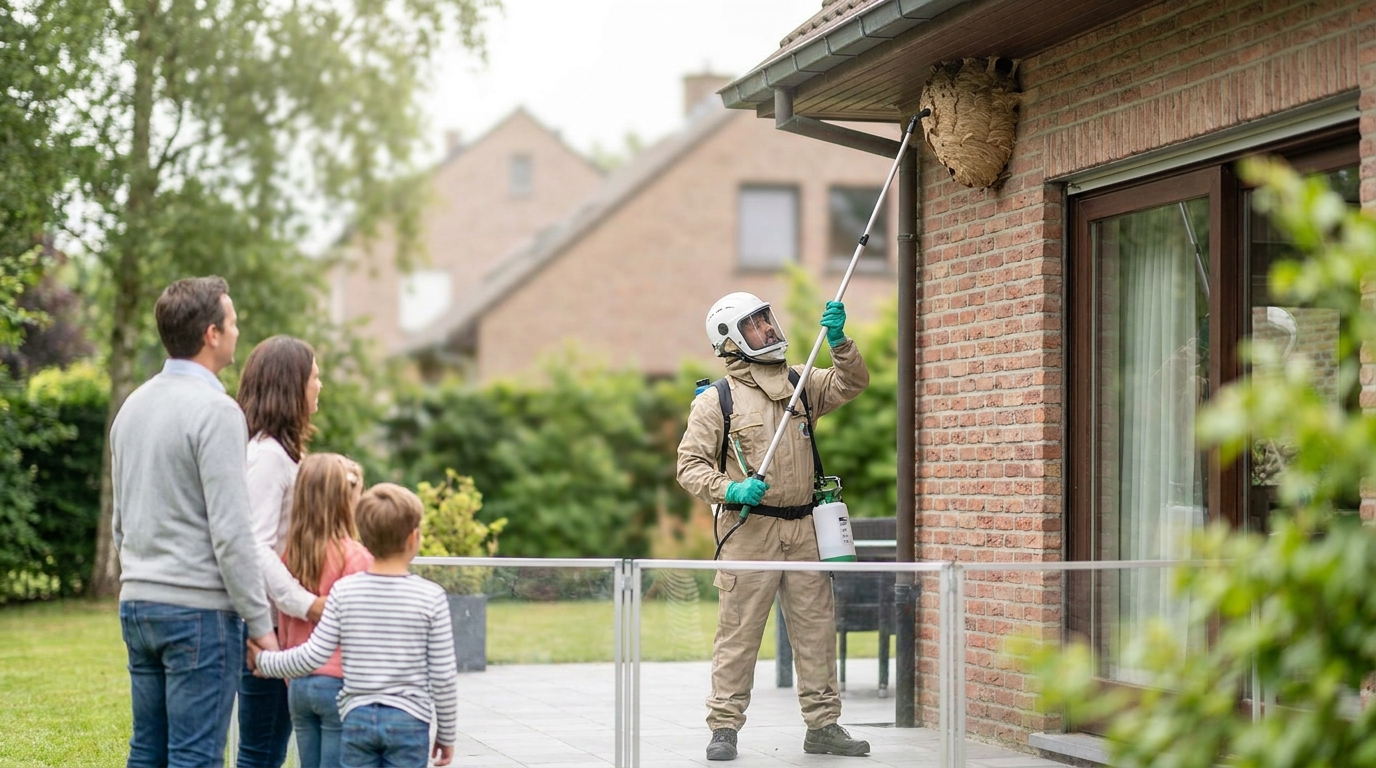
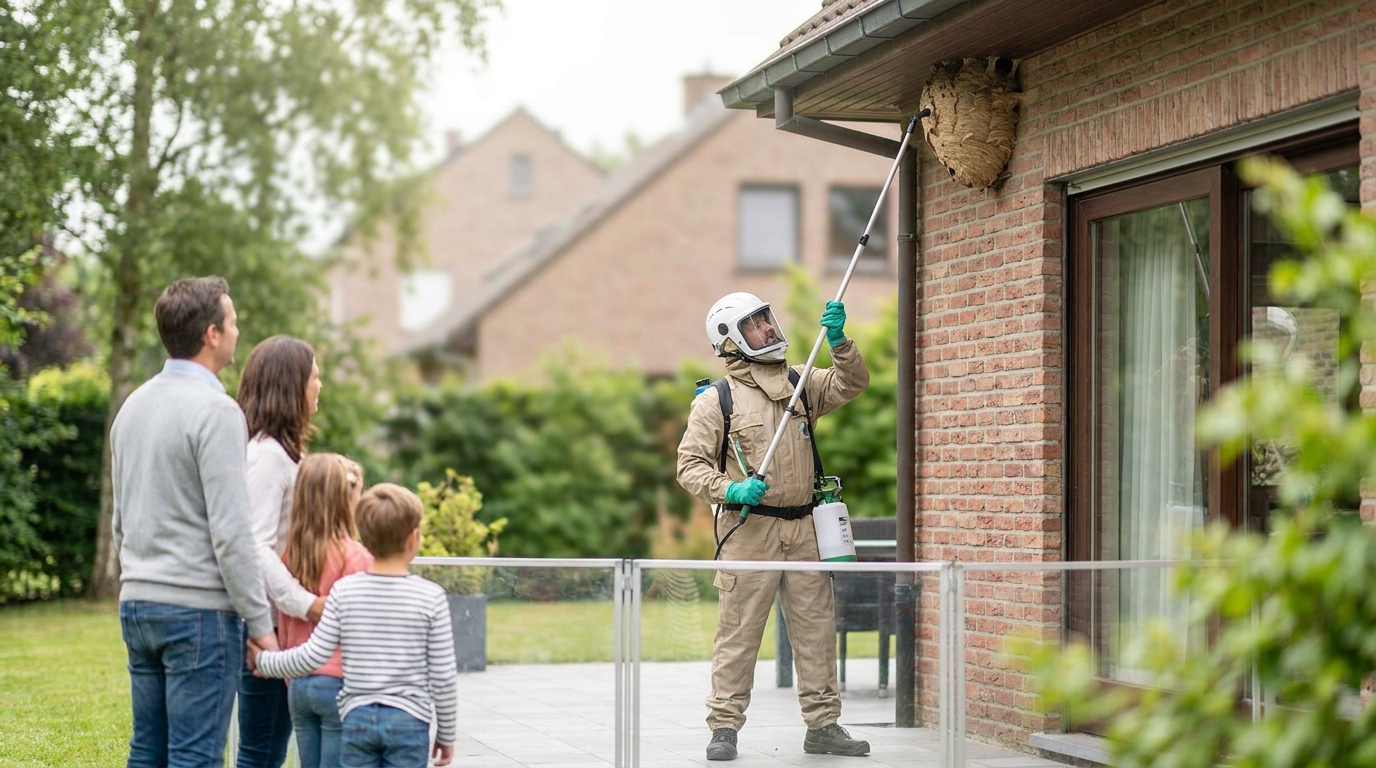
Late August, a quiet garden in Linkebeek. The family is enjoying the patio when someone notices the constant coming and going under the eaves. Dozens of wasps are flying in and out of a hole in the cornice. The nest has been there for weeks, without anyone really knowing it.
Things to remember
-
This article takes a hyperlocal approach by describing a typical intervention in Linkebeek
-
It combines technical expertise on local species (wasps, Asian hornets) with immediate commercial reassurance, emphasizing family safety and transparent pricing from Frelons
-
The Characteristics of Wasp and Hornet Nests in Linkebeek
-
How does the extermination of a hornet nest work with Frelons.be?
This is exactly the kind of call we get every day during the summer. And people’s first question is always the same: Is it dangerous, and how much will it cost? We’ll answer both questions straight away.
This guide describes a typical operation in Linkebeek, from discovering the nest to its complete removal. We discuss the species actually found in the region, the risks to your children and pets, and how we work at Frelons.be. No unnecessary jargon. Just what you need to know before picking up the phone.
The Characteristics of Wasp and Hornet Nests in Linkebeek
Linkebeek is that lush, green town south of Brussels, with its wooded gardens and old houses. It’s an ideal playground for wasps. Wooden eaves, sheds, thick hedges, poorly insulated attics: all perfect places for a colony to settle without anyone noticing.
The species most commonly found here is the common wasp (Vespula vulgaris). This species prefers dark cavities: under roofs, in hollow walls, and sometimes even underground. A nest can house several thousand individuals by late summer. And it is precisely at that time, in August and September, that the wasps become most aggressive. Why? The life cycle of wasps explains everything.
In the spring, a single queen founds the colony. She builds the first cells, lays eggs, and raises the first workers. Throughout the summer, the nest grows. The workers feed the larvae, which in return produce a sugary substance that the adults love. But by the end of the season, there are no more larvae to feed and no more sugar available. The wasps then go looking for their fix elsewhere: your glass of lemonade, your pie, your barbecue. That’s when they become unbearable and sting at the slightest sudden movement.
Besides that, there's a much more troubling guest: the Asian hornet in Linkebeek. This invasive species has spread throughout Belgium in recent years, and our region is no exception. It can be recognized by its yellow legs and very dark thorax. Its enormous nests are often perched high up in trees, sometimes more than ten meters high. The problem? The Asian hornet is decimating bee populations and poses a real danger if you get too close to its nest.
You may also come across polist wasps—those slender wasps that build small, umbrella-shaped nests under balconies. Do polist wasps sting? Yes, but they’re much less aggressive and will only attack if you directly touch their nest. The same goes for mason wasps or the tiny parasitic wasps you see flitting around flowers: most are solitary, harmless, and some don’t even sting. The problem is that it’s hard to tell the difference with the naked eye. And that’s exactly why a professional opinion makes all the difference: we identify the species before taking action.
How does the extermination of a hornet nest work with Frelons.be?
You call us in the morning, and we usually stop by sometime during the day. It's as simple as that. The Wasp Nest Removal in Linkebeek It doesn't require an appointment made three weeks in advance. An active nest can't wait, especially when there are children or people with allergies in the house.
First step over the phone: we’ll ask you a few questions. Where is the nest located? How high up is it? Do you see a lot of insects flying in and out? A photo taken from a distance helps us a lot in identifying the species and preparing the right equipment. Because we don’t treat a wasp in Linkebeek under a ledge, just like a hornet's nest eight meters up in a linden tree.
When he arrives on site, our technician is equipped with a full-body suit—the kind that can withstand even the most determined stings. He pinpoints the entrance to the nest, then injects an insecticide directly inside using a telescopic pole. The advantage of this method? We treat the source without spreading the product all over your yard. The wasps that return carry the insecticide back to the heart of the colony, and within a few hours, it’s all over.
For nests that are hard to reach—such as those in walls or on roofs—we adapt our approach. Sometimes we have to drill a small opening; other times, we use specialized equipment to reach a deep cavity. The’Wasp Extermination in Linkebeek It takes experience—not just a can of spray you bought at the hardware store. In fact, forget about those over-the-counter aerosol sprays: they just agitate the wasps without destroying the nest, and you risk getting stung a dozen times for nothing.
A rapid response It usually takes between fifteen and thirty minutes, depending on the location. We’ll explain what we’re doing, remove the nest when possible and safe to do so, and provide you with clear instructions for the next few hours. Our team is available 7 days a week, including weekends and holidays, because a nest doesn't take Sundays off.
And the Linkebeek Fire Department What about all that? Many people still think to call them. But for several years now, firefighters have no longer responded to wasp nests, except in cases of imminent danger or when someone is in distress. They almost always refer people to specialized companies. You might as well save yourself some time and contact us directly.
Safety, Fees, and Precautions After a Local Procedure
How much does it cost, once and for all? That’s the question everyone’s asking, and we hate vague answers. The Cost of nest removal The cost generally ranges from 80 to 150 euros, depending on how difficult it is to access the nest, its height, and the species involved. An easily accessible wasp nest costs less than an Asian hornet nest perched high in a tree. We’ll give you a price quote over the phone before we come out. There are never any unpleasant surprises on the bill—ever.
Let's talk about security, because that's the real issue. A wasp sting, for most people, it’s painful but not serious. It swells, it stings, and it goes away in a few hours with ice. The real danger is an allergic reaction. About 3% of the population experiences a severe allergic reaction, which can lead to anaphylactic shock. If, after a sting, you have trouble breathing, feel dizzy, or experience swelling of the face or throat, call 112 immediately. No exceptions.
With children or pets at home, the risk takes on a whole new level. A dog that tries to swallow a wasp could get stung in the mouth, and then it becomes a serious matter. A nest near a playground or a patio is non-negotiable: it must be dealt with. The garden safety That comes before anything else, especially when you're enjoying nice weather with your family.
After we’re done, here are a few simple precautions. Stay away from the treated area for 24 hours, to give the last few wasps time to return and die. Avoid handling the remains of the nest without gloves. If a few wasps are still circling around the next day, that’s normal—they’re stragglers, and they’ll disappear quickly.
Side nest prevention, you can take action before a colony even settles in. In the spring, inspect your eaves, sheds, and attics. A solitary queen starting a small nest in April is a thousand times easier to deal with than a colony of four thousand wasps in September. Seal cracks in the walls, check ventilation openings, and keep trash cans tightly closed—wasps love sugary waste. A pheromone trap set up early in the season can also help prevent Asian hornets from settling near your home.
Conclusion
A wasp or hornet nest isn’t something you can handle by spraying insecticide from your front door. It requires proper identification, the right equipment, and a bit of composure. In Linkebeek, as throughout the Brussels region, we respond quickly and safely, with a price quoted up front.
Have you spotted a nest? Don’t let it get any bigger. The longer you wait, the larger the colony becomes and the harder it is to deal with. Contact Frelons.be—we’ll take care of the rest, 7 days a week. Your garden, your children, and your pets will be back to enjoying peace and quiet the very same day.
Frequently asked questions
Why are there so many wasp and hornet nests in Linkebeek at the end of summer?
Linkebeek has many wooded gardens, wooden eaves, and attics that are ideal for colonies. In August and September, the nests reach their maximum size, and the lack of food drives the workers to search for sugar near your patios, which increases their aggressiveness
How much does it cost to remove a wasp or hornet nest in Linkebeek?
The cost of a local service generally ranges from 80 to 150 euros, depending on the height of the nest, how easy it is to access, and the species involved. At Frelons.be, we provide you with this transparent pricing over the phone before we come out to your location to avoid any unpleasant surprises.
Do the Linkebeek firefighters still respond to wasp nests?
No, except in cases of imminent danger or extreme distress, the local fire department no longer responds to this type of pest problem. They systematically refer residents to licensed pest control professionals such as Frelons.be.
How does Frelons.be go about exterminating a nest?
Wearing full-body protective gear, our technician injects a targeted insecticide directly into the heart of the colony using a telescopic pole. The wasps then spread the insecticide throughout the rest of the nest, eliminating the entire colony in just a few hours.
What should you do immediately if you are stung by a wasp or hornet?
Apply ice to relieve the swelling and pain, which usually subside within a few hours. However, if the victim has difficulty breathing, feels dizzy, or has facial swelling (signs of anaphylactic shock), call 112 immediately.
What precautions should be taken after the technician has left?
It is essential to stay away from the treated area for 24 hours to allow any remaining wasps time to return to the nest and die. Never handle the remains of the nest without gloves, and keep your children and pets indoors.
 French
  English
  Dutch
Dutch
0 Comments