
Wasp Nest Removal in Rhode-Saint-Genèse: Guide 1640
Contents
-
Understanding the Behavior of Wasps and Hornets in Rhode-Saint-Genèse
-
Step-by-Step Guide: The Process of a Demolition Project in 1640
-
How Pest Control Services Work and Rates for Residents of Rhodes
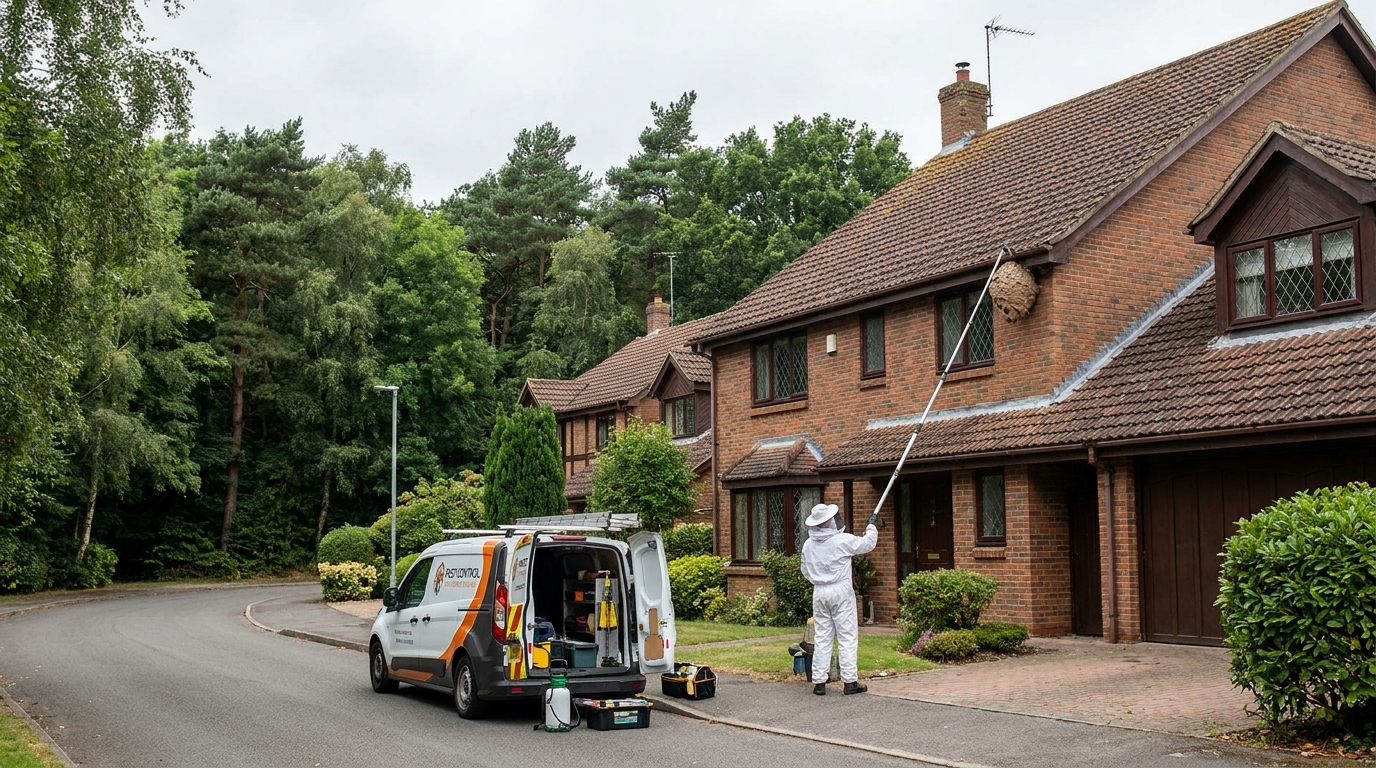
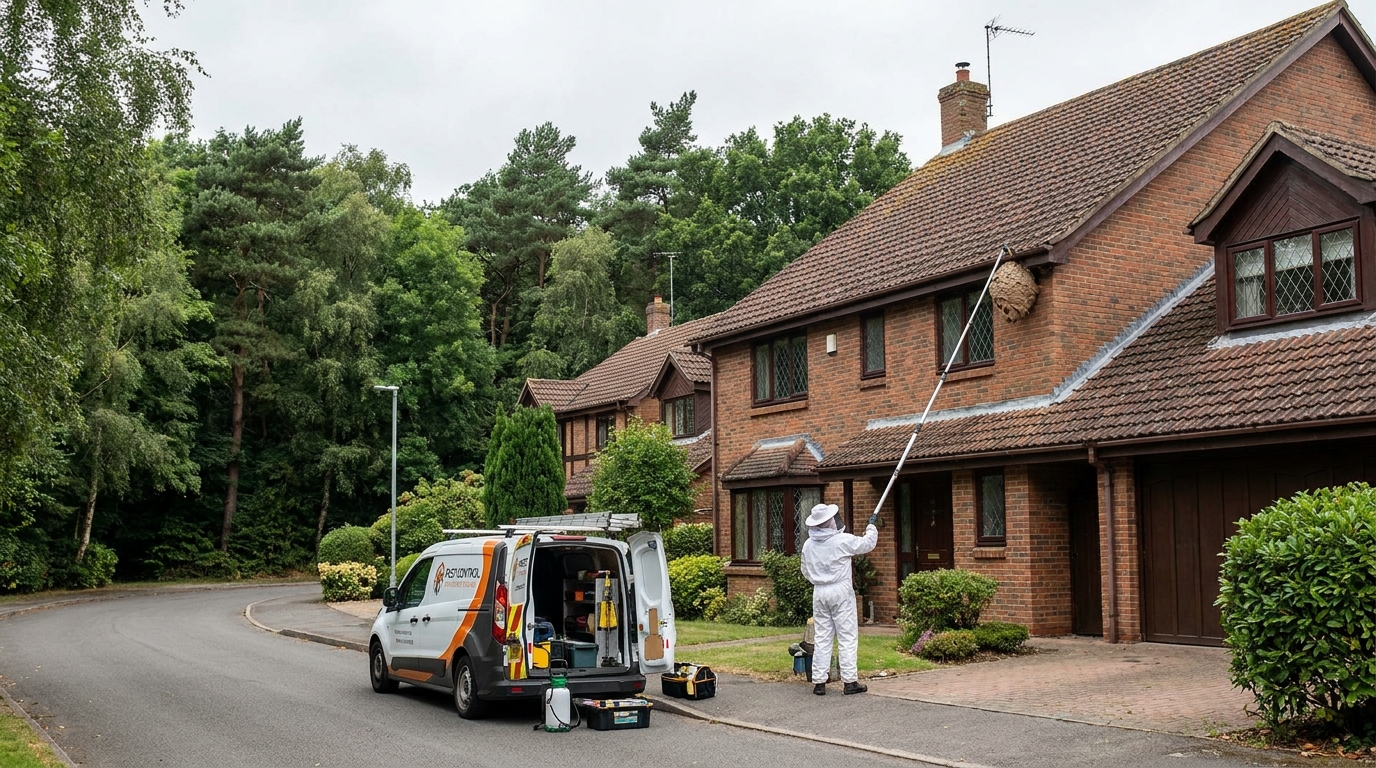
Last summer, we received a call one Sunday morning. A family near the Forêt de Soignes, in Rhode-Saint-Genèse, had just discovered a wasp nest the size of a soccer ball under their eaves. The children had been playing in the yard just twenty minutes earlier. We encounter this kind of situation several times a week between April and November. And every time, there’s the same sense of urgency in people’s voices on the phone.
Things to remember
-
We stand out by sharing the story of a real-life operation that took place near the Forêt de Soignes in Rhode-Saint-Genèse
-
The article combines technical expertise on the Asian hornet with a strong local presence (1640) to reassure residents about safety and prompt action year-round
-
Understanding the Behavior of Wasps and Hornets in Rhode-Saint-Genèse
-
The Course of a Destruction Operation in 1640
If you live in the 1640 area and are looking for a reliable wasp exterminator, this article is for you. We’ll explain how we work, what we’ve observed in the field in Rhode-Saint-Genèse, and, most importantly, how much it actually costs. No sales pitch—just facts, concrete steps, and real-world experience.
At frelons.be, we’re on call all year round. Yes, even in winter. The Asian hornet in Rhode-Saint-Genèse doesn’t take a vacation—and neither do we. So you might as well know exactly what to expect.
Understanding the Behavior of Wasps and Hornets in Rhode-Saint-Genèse
First things first: not all striped insects are wasps. Identifying the wasp is the first step before taking any action. We regularly encounter residents of the 1640 area who are convinced they have a hornet’s nest when it’s actually just common wasps. The opposite happens, too. The distinction matters because their behavior, level of aggression, and the method of removal are not the same.
The common wasp (Vespula vulgaris) measures between 12 and 17 mm. It is slender, bright yellow in color, with distinct black stripes. It often builds its nest in cavities: under a roof, in a hollow wall, and sometimes even in the ground. The European hornet is larger, more reddish-brown, and actually less aggressive than people think. The one that poses a real problem is the Asian hornet (Vespa velutina).
The Asian hornet is becoming increasingly common in Rhode-Saint-Genèse. The proximity of the Forêt de Soignes provides an ideal habitat for it: abundant vegetation, wetlands, and biodiversity to exploit. It can be recognized by its black thorax and yellow legs with yellow tips. Its nest, often high up in trees, can grow to the size of a large trash bag by the end of the season. And it is significantly more dangerous than the common wasp, especially when approached.
The life cycle of these pests follows a predictable pattern. In the spring, the founding queen emerges from hibernation and begins building a primary nest—often small and inconspicuous—in a sheltered spot. This is the best time to take action: a nest the size of a golf ball, with a single queen, can be eliminated in just a few minutes. Starting in June and July, the colony explodes in size. The population grows from a few dozen to several thousand individuals in just a few weeks. Activity peaks in August and September. The wasps become more aggressive as they search for sugar to feed the new queens.
What many people don’t realize is that nests are never reused from one year to the next. An old, empty nest is not dangerous. However, fertilized queens that left the nest in the fall hibernate nearby: under the bark of a tree, in a pile of wood, or in an attic. They will emerge the following spring. That’s why we stay active year-round at frelons.be: trapping queen wasps in the spring is a powerful tool for limiting summer colonies.
In Rhode-Saint-Genèse specifically, gardens with trees and properties with old buildings offer dozens of nesting sites. We regularly respond to calls in the neighborhood around Chemin de Waterloo, near the golf course, and, of course, near the edge of the forest. Wasps in Rhode-Saint-Genèse have no shortage of food or shelter. If you have fruit trees, a patio where you eat outdoors, or an open compost bin, you’re a target.
Step-by-Step Guide: The Process of a Demolition Project in 1640
Have you noticed suspicious activity under your roof or in a hedge? Here’s exactly what happens when you call us to remove a wasp nest in Rhode-Saint-Genèse.
Step 1: Diagnosis over the phone. We’ll ask you a few simple questions. Where is the nest? How high up is it? When did you first notice it? Has anyone been stung? If you can send a photo (even if it’s blurry or taken from a distance), that’s a big help. This helps us distinguish between wasps, European hornets, and Asian hornets before we even head out. We also assess the urgency: a nest above a playground isn’t the same priority as a nest in a tree at the far end of the property.
Step 2: Travel and on-site assessment. We usually arrive within 24 hours. For urgent cases (multiple stings, a nest within a child’s reach, or a known allergy in the household), we do our best to respond the same day. Once on site, we inspect the nest, identify the species, and assess accessibility. A nest in a gutter two meters above the ground requires a different approach than an Asian hornet nest 15 meters up in an oak tree.
Step 3: Securing the area. Before taking any action, we secure the perimeter. The safety of the garden and its occupants is non-negotiable. We ask the residents to stay indoors with the windows closed. This includes pets as well. We cordon off the area if necessary. We put on our full protective gear: a waterproof suit, reinforced gloves, and a face shield. Nothing is left to chance.
Step 4: Treatment. Depending on the situation, different techniques are used. For an accessible nest, a professional-grade insecticide is injected directly into the nest’s entrance using a telescopic pole or a low-pressure sprayer. The product takes effect within minutes on the insects present and continues to eliminate those returning to the nest for 24 to 48 hours. For nests at height, we use specialized equipment (a pole up to 20 meters long, and a cherry picker if necessary). The nest is then physically removed when possible and advisable.
Step 5: Follow-up. We don’t just leave you with a “good luck.” We verify that the activity has stopped, give you advice on how to prevent reinfestation, and remain available if you notice any further movement in the days that follow. In 95% cases, a single treatment is sufficient.
An important point about firefighters in Rhode-Saint-Genèse: many people still think that’s their job. In reality, Belgian emergency services no longer routinely respond to wasp nests. They may do so in certain cases of absolute emergency, but they are increasingly referring people to pest control professionals. In fact, it is often the municipality itself that redirects calls to certified service providers such as frelons.be.
A professional intervention takes between 30 minutes and two hours, depending on the complexity. The intervention we carried out near the Forêt de Soignes that I mentioned in the introduction? Forty-five minutes flat—the nest was removed, and the family was reassured. The children were playing outside again the next day.
How Pest Control Services Work and Rates for Residents of Rhodes
The first question everyone asks: How much does it cost? The price of wasp extermination depends on several factors, and I’d rather be transparent than just throw out a single number that doesn’t mean anything.
For a standard service call in Rhode-Saint-Genèse (accessible nest, reasonable height, common wasps), expect to pay between 80 and 150 euros. This rate includes travel within the municipality of Rhode-Saint-Genèse, treatment, removal of the nest when feasible, and follow-up. For a high-up Asian hornet nest requiring special equipment, the cost can rise to 200–250 euros. It’s more expensive, yes, but the job is also more technical and risky.
There is an additional charge for emergency service (evenings, weekends, and holidays). Let’s be honest: sending a technician out on a Sunday at 8 a.m. for an emergency comes at a cost. But we’re reasonable about it. And most importantly, we always quote the price before we start the job. No unpleasant surprises on the bill.
Some factors that affect the price:
-
The height of the nest (a nest 12 meters high requires a telescopic pole or a cherry picker)
-
The species (the Asian hornet requires extra precautions)
-
Accessibility (a nest in a hollow wall is more complicated than a nest under an eave)
-
Time of service (standard weekday rate; surcharge on weekends and in the evenings)
As for financial assistance, check with the municipality of Rhode-Saint-Genèse. Some Walloon and Flemish municipalities offer a grant or partial reimbursement for the removal of Asian hornet nests as part of efforts to combat this invasive species. The details vary, but it’s worth giving the municipality’s environmental department a call.
How does the process actually work when you want to use our pest control services in Rhode-Saint-Genèse? There are three options:
-
Call frelons.be directly. We're available 7 days a week.
-
Please fill out the contact form on our website with a description and, if possible, a photo.
-
You can go through the local government office, which can refer you to us.
We obviously cover the entire 1640 area, as well as the neighboring municipalities: Waterloo, Uccle, Linkebeek, and Beersel. If you live in the area and aren’t sure what’s buzzing in your garden, don’t wait until the nest gets bigger. A nest treated in May costs less and takes less time than one treated in August, when the colony numbers in the thousands.
One last point, and this is something we see often: some people try to destroy the nest themselves—using boiling water, a trash bag, or worse, fire. Let me be clear: don’t do that. Every year in Belgium, people end up in the emergency room after attempting to destroy a nest on their own. Wasps attack en masse when they feel threatened, and a single sting can cause an anaphylactic shock in someone with an allergy (who may not even know they have one). The cost of a quick intervention by a professional is nothing compared to a trip to the emergency room.
At frelons.be, we’re trained, equipped, and insured. We know Rhode-Saint-Genèse, its neighborhoods, its types of buildings, and its trees. We know where to look, how to act quickly, and how to guarantee you a thorough and lasting result.
Conclusion
A wasp or hornet nest in Rhode-Saint-Genèse won’t go away on its own. The longer you wait, the larger the colony grows, and the more complex the removal will be. Whether it’s a small nest under a roof tile or a large Asian hornet nest perched in a tree on the edge of the Forêt de Soignes, the answer is the same: call a professional.
Contact frelons.be as soon as you notice any suspicious activity. We respond quickly throughout the 1640 area, provide you with a clear price quote before we start, and don’t give up until the problem is solved. Your garden is your living space. We’re here to make sure you can enjoy it stress-free.
Frequently asked questions
How can you tell the difference between a wasp nest and an Asian hornet nest in Rhode-Saint-Genèse?
The common wasp measures between 12 and 17 mm and has bright yellow and black stripes, while the Asian hornet is larger, has a black thorax, and yellow tips on its legs. In addition, Asian giant hornet nests are usually found high up in trees and can grow to the size of a large trash bag by the end of the season.
How much does it cost to remove a wasp or hornet nest in the 1640 area?
The cost of a standard service call in Rhode-Saint-Genèse ranges from 80 to 150 euros for an accessible wasp nest. For a high-up Asian hornet nest or an emergency service (on weekends or in the evening), the price can range from 200 to 250 euros due to the specialized equipment required.
Do the firefighters in Rhode-Saint-Genèse still respond to wasp nests?
No, Belgian emergency services no longer automatically respond to this type of nuisance, except in cases of absolute emergency. The municipality of Rhode-Saint-Genèse refers residents to certified pest control professionals such as frelons.be.
Is it possible to safely destroy a wasp nest on your own?
This is strongly discouraged, as DIY methods (fire, boiling water) trigger mass attacks by colonies and increase the risk of multiple stings or anaphylactic shock. Hiring a properly equipped and insured expert ensures safe and permanent elimination.
When is the best time of year to get rid of a pest infestation?
Spring is the ideal time, because queen founders build primary nests the size of a golf ball that can be eliminated in a matter of minutes. Waiting until late summer makes the process more complicated, as the colonies by then consist of several thousand more aggressive individuals.
 French
  English
  Dutch
Dutch
0 Comments