
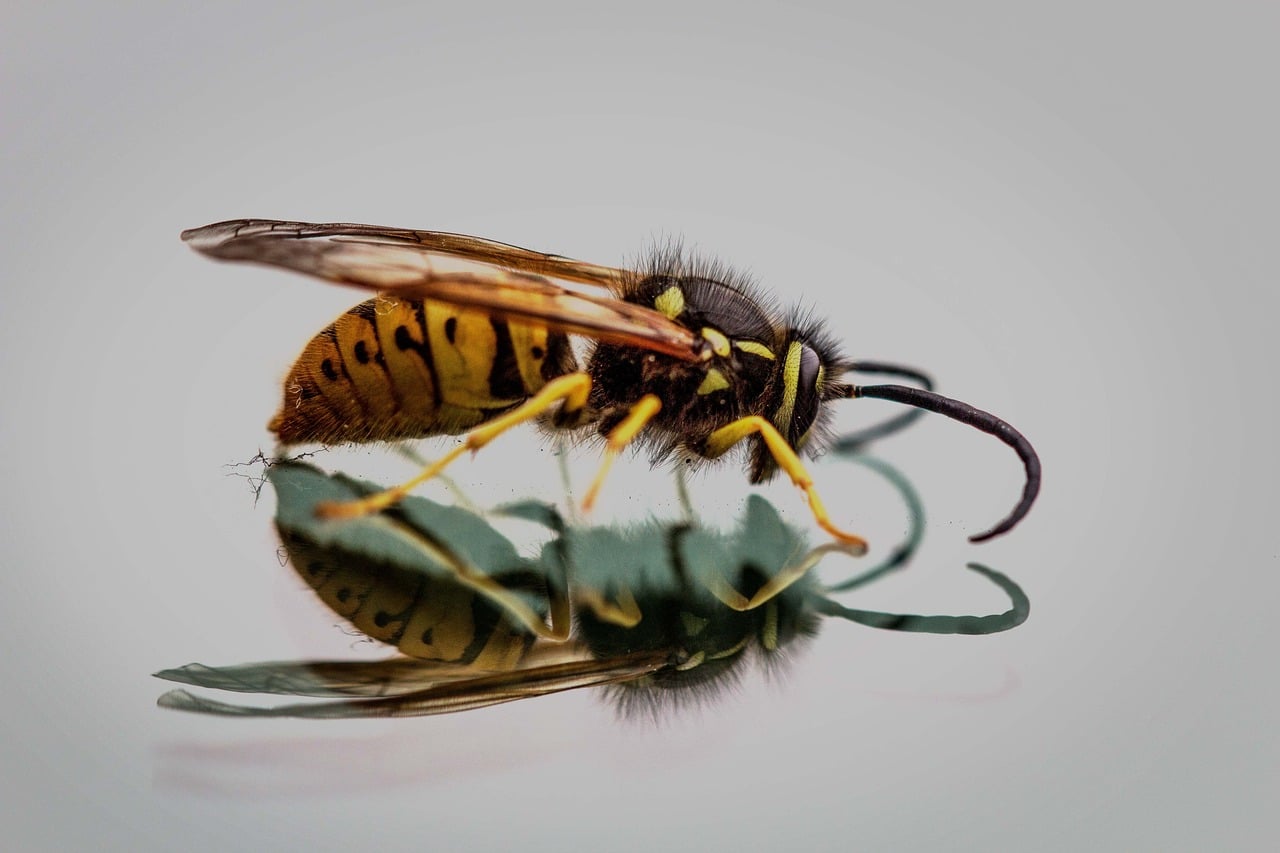
The European Hornet: pest or useful species?
The European hornet (Vespa crabro) is a species of social wasp widely distributed in Europe. Although often feared, the European hornet plays an important role in the ecosystem. This article will provide you with key information on the detection of European hornets, their life cycle, the dangers they can pose and the measures you can take to manage their presence.
How to detect European Hornets?
- Physical Appearance: The European hornet is larger than common wasps, measuring between 2.5 and 3.5 cm in length. It has a yellow abdomen with black stripes and a reddish head. It has brownish wings and orange legs.
- Sounds and Behaviors : European hornets emit a distinctive buzzing sound when they fly. They are often seen foraging on flowers, hunting other insects or feeding on sweet fruit and tree sap.
- Nests : European hornet nests are generally built in sheltered places such as attics, tree cavities, hollow wall crevices and sometimes even abandoned burrows. The nest is made from chewed plant fibers, forming a grayish paper structure.
The European Hornet Life Cycle
-
- Spring : In spring, the queen emerges from hibernation and begins to build an initial nest and lay the first eggs. These eggs give rise to the first workers, who take charge of the nest's expansion.
- Summer : The nest grows rapidly over the summer, sometimes reaching the size of a football. The queen continues to lay eggs, and the colony can number several hundred hornets.
- Autumn : In autumn, new queens and males hatch. After mating, the males die, while the new queens look for places to hibernate. The rest of the colony dies as winter approaches.
- Winter : The new queens hibernate in sheltered places, such as tree bark or attics, to start the cycle again the following year.
The Dangers of European Hornets
-
- Stings: European hornet stings can be painful and, in some cases, cause severe allergic reactions. People sensitive to insect stings need to be particularly careful.
- Threats to bees: European hornets can sometimes attack honeybee hives to feed on larvae and workers, although this threat is less pronounced than that of Asian hornets.
- Nuisance: The presence of European hornet nests near homes can be a nuisance and a potential risk for residents, especially if the hornets feel threatened.
What to do if European hornets are present?
-
- Don't Panic: It's important to remain calm if you discover a European hornet nest. Don't try to destroy it yourself, as this could provoke a defensive attack.
- Contact the Professionals: Call on specialized professionals such as pestpatrol.be in pest management to assess and, if necessary, safely remove the nest.
- Notify the local authorities: In some cases, it may be useful to report the presence of European hornets to the local authorities, especially if the nest is located in a public area.
- Protect Your Home : Seal any openings in your house and around your garden to prevent hornets from gaining a foothold. Avoid leaving food or sweet drinks outside, as these can attract hornets.
By following these tips, you can reduce the risks associated with European hornets and ensure the safety of your environment. For further information or professional help, please visit our website at hornets.be or contact pest management experts such as pestpatrol.be
 French
  English
  Dutch
Dutch
0 Comments